Doug Chapin for Congress
September 17, 2026 · Newsletter
There’s Less Room for Error
For most of us, financial stability doesn’t mean wealth. It means having a little breathing room.
Enough room in your checking account that an unexpected car repair is irritating instead of devastating.
Enough left over after the bills are paid to put something into savings. Enough predictability that you can think about next year (hell, next month) instead of constantly recalculating next week.
That little amount of breathing room matters. And lately, if feels like there is less and less of it.
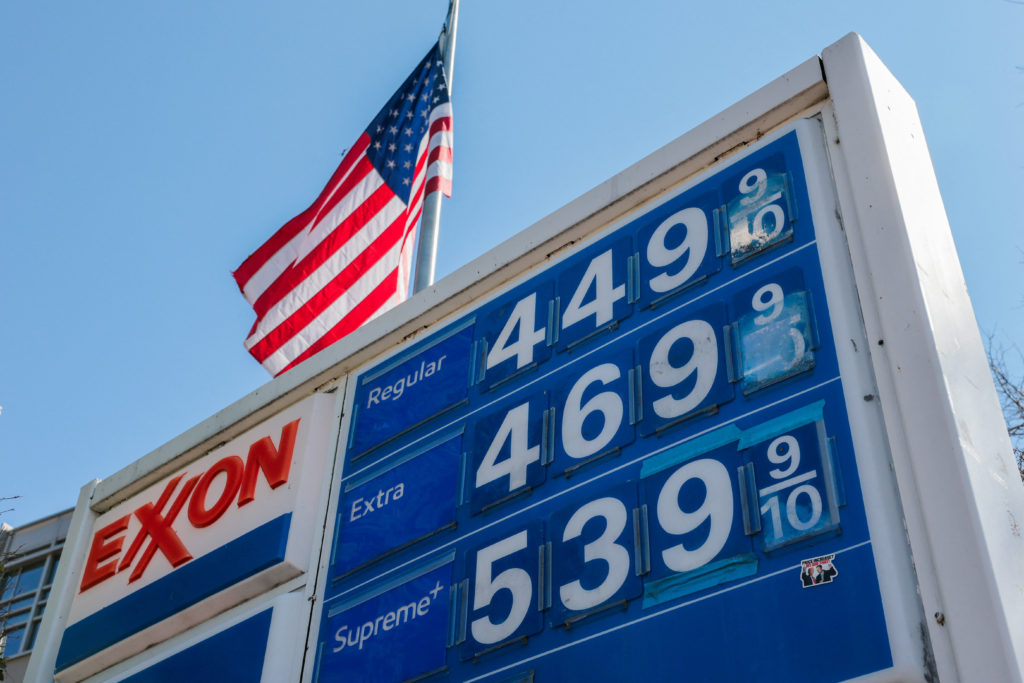
New numbers from the Bureau of Labor Statistics on inflation showed prices rising another 0.4% in August. Compared to just one year ago? Prices are up 3.4% overall. Food was up 2.7%, energy was up 16.3%, and gasoline is up a staggering 27.4%.
Those numbers don’t hit everyone the same way, but they all eventually find their way into somebody’s budget.
Maybe it’s another $10 or $20 at the grocery store. Maybe it’s the difference between filing the gas tank all the way up (what a concept) or just putting in enough to coast in on fumes by the end of the week.
Maybe it’s deciding the leaky gutters can wait, the trip can’t happen this year, or gifts for each other will be light this holiday season.
None of these decisions, by themselves, sounds catastrophic.
But that’s part of the whole problem.
Financial pressure usually doesn’t arrive as one dramatic moment. It accumulates quitely. A little more here, a little more there. Slowly building until when the real catastrophe hits, there’s nothing left.
The latest New York Times/Siena national poll gives us some context on how important affordability is to voters right now. Among likely voters, the poll found a 51% to 43% split when those responding asked which party they trusted more on the cost of living. Whatever conclusions someone draws from the numbers, affordability is clearly still part of the national conversation as we head into November.
But, household budgets are only part of the uncertainty people are trying to navigate.
Planning for a Future That Is Already Arriving
AI is moving from something we talked about as the future to something that is already changing our workplaces. Some of those changes could be useful. New tech can make people more productive, create whole industries we haven’t imagined yet, and take over repetitive work nobody particularly enjoys doing.
It can also lead to job loss.
Both things can be true.
That’s why the conversation we’re having around AI can’t just stop at whether the technology itself is good or bad. We need to ask more useful questions about what’s happening around it. What happens to workers whose jobs change faster than they can retrain? What happens to our wages if companies need fewer people to product the same amount of work? Who really benefits from these productivity gains? What sort of investments are being made in communities to offset the spread of data centers? And chiefly, what should our government be doing right now to prepare for those changes rather than trying to bury their heads in the same and just try and catch up afterwards?
There really isn’t one answer that applies across the board. Different industries will experience AI differently, and a lot of jobs will evolve rather than disappear entirely.
Still, the uncertainty has a cost of it’s own. It’s really difficult to make long-term decisions when you’re not even sure what your industry is going to look like five years from now.
Do you change careers? Go back to school? Buy a house? Take a new job?
Or just stay where you are, and hope your position changes instead of going away altogether.
We’ve always had to deal with uncertainty. The difference right now though is how many major changes seem to be arriving at once.
Another Variable Nobody Needed
Energy is a good example. Gas prices were already up over the past year before the latest round of entirely unneeded geopolitical instability. The August CPI report (Consumer Price Index) showed that gas prices are 27.4% higher than a year ago.
Then there’s that whole Iran War thing and this continuous loop of uncertainty surrounding one of the world’s most critical energy regions.
On Tuesday September 15, the House considered a War Powers resolution directing the President to remove U.S. Armed Forces from the hostilities with Iran.
The resolution passed 220 to 204. Seven different Republicans voted with 213 Democrats in favor of the resolution. Care to take a wild guess how ol’ Tom Emmer voted? He voted against it. He voted to continue to allow the President all the power he wants to unilaterally decide when this war ends.
People can disagree about what American policy toward Iran should be. They can disagree about the circumstances under which our military is appropriate.
Congress is still supposed to have a major role in that decision. That’s part of the reason these votes matter so much. Members of Congress are required to put their positions on the record when questions involving war, presidential authority, and American service members are put in front of them.
We voters get to decide what we think of those choices, and that’s worth remembering because the consequences of what happens in Washington D.C. rarely if ever stay there.
Foreign policy can affect the energy markets, those energy prices directly affect transportation, and those costs always work their way through the prices we pay for other goods. Eventually enough dominoes fall and a thousand miles away, a family in Minnesota has to make significant changes to their budget.
That’s how interconnected all of this has become.
When the Margin Disappears
Maybe right now the biggest challenge isn’t any single price increase, technology change, or overseas conflict.
It’s the shear combination. It’s trying to manage today’s expenses while not knowing what lies ahead. It’s week after week, watching the grocery bill skyrocket, wondering what happens to you and your family if AI takes your job.
It’s paying more at the pump than EVER before while a tinpot tyrant plays war games so we don’t talk about the Epstein List.
Eventually, we’re going to run out of things to trim. That’s what’s terrifying so many people today, what happens when I can’t afford my rent? Pay my car insurance? Afford my medications?
Certain people in D.C., Tom Emmer included, would like you to think that it’s your fault. You should be cutting back more. You shouldn’t get coffee from Starbucks. You don’t deserve to eat at a nice restaurant.
We’re so far past all that.
Know someone who should be following our campaign? Share our newsletter with them today!
Can people still build enough financial breathing room to absorb the things life will absolutely through their way? Can a family afford to repair the car without needing to reach for a credit card? Can someone in their 20s or 30s realistically plan to buy a house any time soon? Can older workers really plan for retirement?
These aren’t extravagant expectations, you’re just told by people more powerful and more wealthy that they are.
Government can’t guarantee that nothing bad will happen. It certainly can’t eliminate normal economic cycles, stop every conflict that happens overseas, or predict exactly how AI will shape our future.
But elected officials do make decisions that influence how prepared we are as a Country for these changes. We can look at votes, public positions, and what Congress actually accomplishes. We can compare what a candidate says they’ll do with what someone already in office actually does.
That’s a way more useful measure than another television commercial.
What’s Happening Around the District?
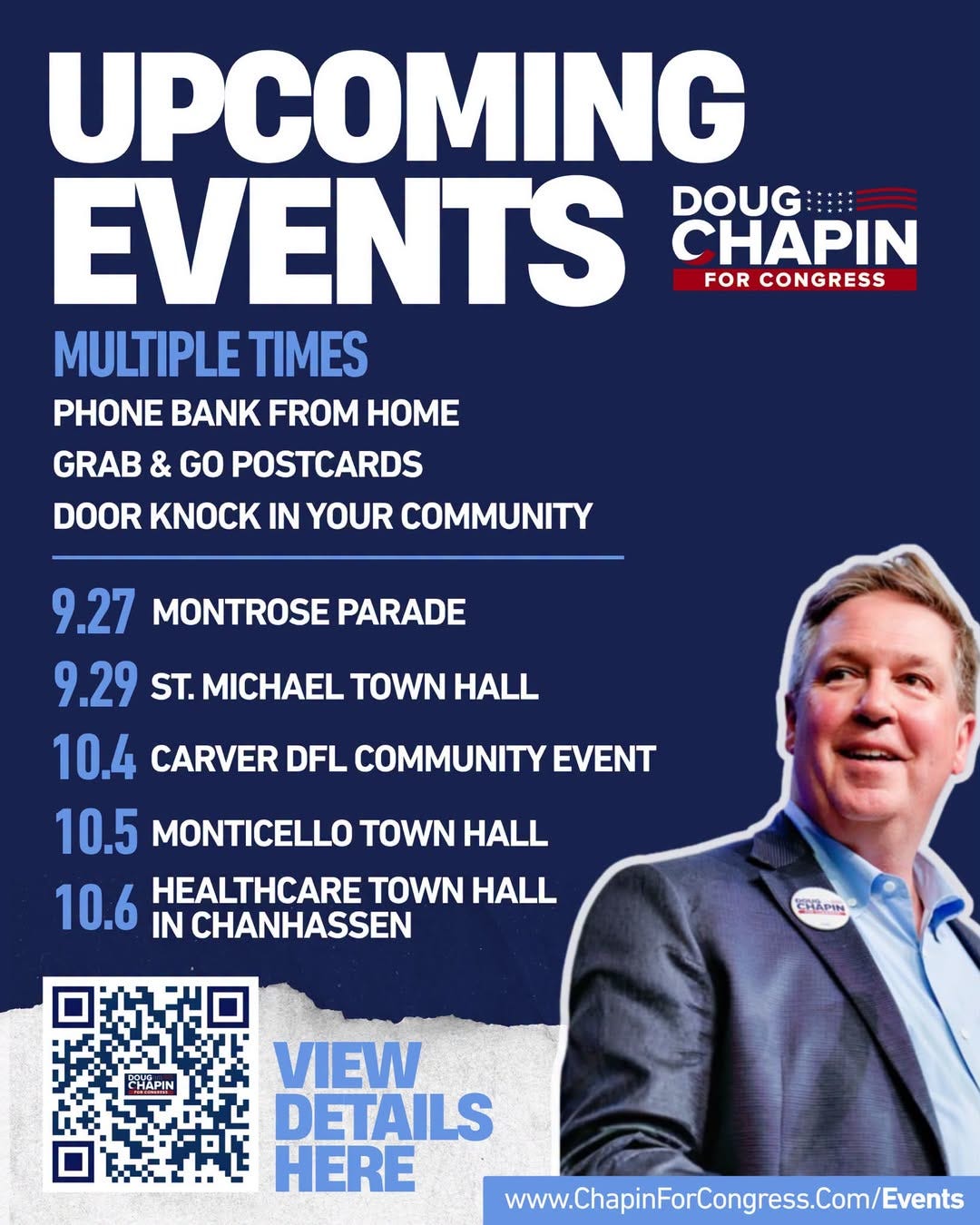
There are many events happening throughout our district as this campaign enters its final weeks. Whether you want to attend an event, volunteer, knock doors, make phone calls, send postcards, or simply learn more about Doug and the campaign, full event details are available through Mobilize and the Chapin for Congress events page!
Chapin Champions
Looking for the easiest way to stay connected with campaign volunteer opportunities?
The Chapin Champions Facebook group is becoming the main place for volunteers to find updates, upcoming events, ways to help, and information about what’s happening across the Sixth District.
If you’re already volunteering, thinking about getting involved, or simply want to keep an eye on upcoming opportunities, the group is a great place to stay connected!
Join the Chapin Champions Facebook group today!

47 Days
There are 47 days until Election Day.
At this point in an election year, it’s easy for everything to quickly turn into noise.
Another poll comes out, another headline, another attack ad, another argument on social media.
But, underneath all the noise are some pretty ordinary questions.
Can people afford their lives? Can anyone really plan for the future?
Do we feel prepared for the changes coming next?
And are all the people in Washington representing us focused on these questions?
Over the next several weeks, voters across the Sixth will have opportunities to hear from candidates, look at their records, ask questions (unless that person is Tom Emmer), and decide what kind of representation we want.
Most people aren’t asking for a life where nothing ever goes wrong.
They’re asking for enough room that when something does go wrong, it doesn’t knock everything else over with it. Enough room to save. Enough room to plan.
Enough room to think beyond the next paycheck.
Right now, for a lot of people, that room feels awfully small.
47 days. Let's make every one of them count!
#Flipthe6th #LFG #ReadyforBetter